

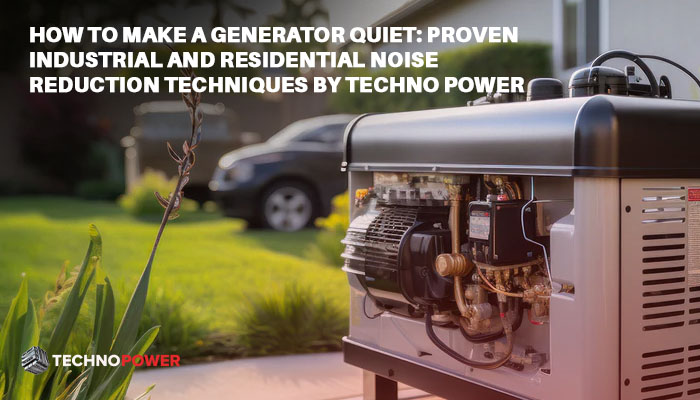
How to Make a Generator Quiet: Engineering Solutions for Silent Power
Power generators are essential for modern life, whether in construction sites, hospitals, factories, or residential complexes. But one common concern unites all users: noise.
A loud generator can disrupt workplaces, disturb communities, and even violate environmental noise regulations. For businesses, generator noise is not only an annoyance, but it can also damage reputation and lower employee productivity.
At Techno Power, efficient energy should also be quiet, sustainable, and compliant. That's why our engineers design solutions that minimize both mechanical and acoustic impact, ensuring uninterrupted power with minimal sound pollution.
The Relationship Between Power and Sound
A generator's sound level depends on its engine size, load, exhaust design, and housing. Larger engines naturally produce more combustion and mechanical noise. However, proper engineering and acoustic treatment can significantly lower the decibel output without reducing performance.
Techno Power's Commitment to Quiet Energy Solutions
Since 2008, Techno Power has been a regional leader in generator design and noise management, delivering diesel and portable generators equipped with advanced acoustic enclosures, Deep Sea controllers, and vibration isolation systems. Our goal is clear: power you can rely on quietly.
Understanding Generator Noise Levels
Measuring Generator Noise
Noise is measured in decibels (dB). A typical industrial generator runs at 70–100 dB, depending on load and distance. Each 10 dB increase roughly doubles perceived loudness.
For comparison: 60 dB = Normal conversation, 85 dB = Heavy traffic, 100 dB = Chainsaw / loud generator
Using a sound level meter at 7 meters (23 feet) is standard for generator testing, as per ISO 8528-10.
Noise Regulations and Standards
International and local authorities like OSHA, WHO, and EU Directive 2000/14/EC set maximum acceptable noise limits for equipment. Compliance is especially important in urban, hospital, or residential zones. Techno Power's acoustic canopies and silencers are designed to meet or exceed these requirements.
Common Sources of Generator Noise
Mechanical Noise
Rotating components such as pistons, bearings, cooling fans, and belts create mechanical vibrations. Poor lubrication or misalignment increases this effect.
Combustion & Exhaust Noise
The exhaust system is often the loudest component. Pressure pulses from combustion escape through exhaust outlets, creating high-frequency sounds.
Structural Vibrations
When a generator is placed on a hard surface, vibration is transferred through the ground and amplified, resulting in increased noise. Metal housings can resonate like speakers, worsening the effect.
How to Make a Generator Quiet: Step-by-Step Guide
Reducing generator noise doesn't always mean replacing the entire unit. With the right approach, you can dramatically lower sound levels.
Choose the Right Location
Distance is your first defense. Each doubling of distance reduces sound intensity by about 6 dB. Place the generator at least 20–30 feet from buildings and direct the exhaust away from occupied areas.
If possible, locate it behind walls or natural barriers to block direct sound waves.
Build a Soundproof Generator Enclosure
An enclosure made from steel, acoustic foam, or fiber-reinforced panels can absorb and block sound.
Key design points: Include air intake and exhaust vents with baffles for airflow, line walls with sound-dampening material (density > 60 kg/m³), ensure heat dissipation to avoid overheating.
Techno Power's custom acoustic canopies are engineered with precise airflow-to-noise ratios, balancing cooling efficiency and silence.
Use Acoustic Barriers or Fences
A barrier made of mass-loaded vinyl, concrete, or wood panels between the generator and noise-sensitive areas can reduce transmission by up to 15–20 dB.
Install a High-Performance Muffler or Silencer
Replacing the standard muffler with a residential-grade silencer or reactive silencer significantly reduces exhaust noise.
Techno Power integrates industrial silencers into its diesel generator systems, achieving up to 25 dB reduction in exhaust output.
Add Anti-Vibration Mounts and Rubber Pads
Isolate the generator from the ground using vibration-absorbing mounts or neoprene pads. These prevent structure-borne noise from spreading to surrounding buildings.
Upgrade to Smart Cooling and Exhaust Systems
High-efficiency cooling fans and well-designed exhaust ducting reduce airflow turbulence—the hidden culprit of mid-frequency noise. Proper duct routing also lowers backpressure, improving both performance and sound levels.
Maintain the Generator Regularly
Loose bolts, clogged filters, and worn bearings make noise worse. Routine maintenance—including oiling, tightening, and cleaning—keeps your generator running smoothly and quietly.
At Techno Power, every maintenance visit includes acoustic and vibration checks to ensure optimal performance.
Advanced Engineering Solutions from Techno Power
Acoustic Canopies and Custom Enclosures
Techno Power manufactures heavy-duty acoustic canopies that achieve noise reductions of up to 35 dB(A). Built with galvanized steel, acoustic foam, and precise ventilation, they protect both performance and peace of mind.
Integration of Deep Sea Controllers
By using Deep Sea (DSE) control systems, Techno Power ensures smooth load transitions and optimal engine speed, minimizing abrupt noise changes caused by sudden load variations.
Synchronization for Multi-Unit Operation
In large industrial applications, multiple generators often run together. Synchronizing units correctly reduces mechanical stress and harmonizes engine operation, lowering overall noise output.
Environmental & Safety Benefits of Quieter Generators
Quieter operation reduces stress for workers, prevents hearing loss, and contributes to community well-being. It also helps companies comply with ISO 14001 environmental management standards, positioning them as responsible energy users.
Case Study: How Techno Power Solved a Noise Problem
A manufacturing plant in Qatar faced complaints due to excessive generator noise exceeding 90 dB(A) at the boundary. Techno Power engineers installed custom acoustic canopies, a secondary silencer, and anti-vibration foundations.
After the upgrade, noise dropped to 58 dB(A) at 7 meters, fully compliant with local regulations. The plant's production continued uninterrupted, and community relations improved significantly.
FAQ
Q1: What is an acceptable generator noise level for residential areas?
A1: Typically below 65–70 dB(A) at 7 meters. Many Techno Power models meet this limit out of the box.
Q2: Can I build my own soundproof box?
A2: Yes, but ensure proper ventilation. Without an airflow design, the generator may overheat. Techno Power can assist with safe custom enclosures.
Q3: Will adding a muffler reduce power output?
A3: Not if installed correctly. A properly designed silencer reduces noise without increasing exhaust backpressure.
Q4: What materials are best for a soundproof enclosure?
A4: Use a combination of steel, MDF, acoustic foam, and mass-loaded vinyl for the best noise absorption and durability.
Q5: How often should I service my generator to keep it quiet?
A5: Every 250–500 operating hours, or quarterly for standby generators. Regular oil changes, tightening, and lubrication prevent excessive noise.
Q6: Does Techno Power offer ready-made quiet generators?
A6: Yes. Techno Power provides factory-engineered super-silent diesel generators with noise levels as low as 55 dB(A), ideal for residential and hospital applications.
Conclusion: Silent Power, Maximum Performance
Reducing generator noise is both an engineering challenge and a sign of responsible energy management. From portable residential generators to industrial-scale power systems, understanding how to make a generator quiet ensures comfort, compliance, and efficiency.
With Techno Power's advanced acoustic solutions, expert engineering, and dedication to quality, you can enjoy reliable power without the noise.
Contact Techno Power:
Email: support@technopowergroup.com
Phone: +971 559 813 463


